
Key Points
- Five countries, including Ireland and Spain, have announced a boycott of Eurovision 2026 due to Israel’s participation
- Eurovision director Martin Green affirmed the contest’s commitment to inclusivity and following established rules
- The contest will proceed with 35 countries, and the EBU implemented new rules to ensure fair competition
Created with AI assistance. Quality assured by Metro editors.
The Eurovision Song Contest boss has released a ‘personal pledge’ about plans for the 2026 contest after five countries announced a boycott.
Last week the European Broadcasting Union conducted a vote regarding Israel’s participation in next year’s event, deciding the country would be permitted to take part.
However soon after, Ireland, Spain Slovenia and the Netherlands confirmed they would boycott the event on account of Israel’s inclusion.
As the deadline for participation cut off on Wednesday night, Iceland also confirmed it was pulling out.
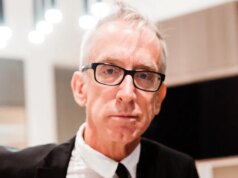
A day on, Eurovision’s director Martin Green has ‘promised ‘written directly’ to fans.
‘I know that many of you will be feeling strong emotions at this time. I certainly am, which is why I wanted to write directly to you,’ he began his open letter.


‘I also know you feel strongly about events in the Middle East and how those realities connect to the Eurovision Song Contest. No one can fail to be moved by what we have seen in the region in the past few years. Some of you have written to us, spoken out, or expressed anger and pain at what they see as silence in the face of tragedy. I want to say that we hear you. We understand why you feel so strongly and that we care too.
‘The Eurovision Song Contest was born 70 years ago – in a divided and fractured Europe – as a symbol of unity, peace, and hope through music. Those foundations have not changed and neither has the Contest’s purpose. This Contest has survived and thrived despite wars, political upheaval, and shifting borders. Through it all, it has remained a place where people from all corners of Europe, and now the world, can come together to celebrate creativity and connection despite, and because of, the world around us.’
He continued: ‘We know many fans want us to take a defined position on geo-political events. But the only way the Eurovision Song Contest can continue to bring people together is by ensuring we are guided by our rules first and foremost.
‘As we look to next year, we will ensure that all participating broadcasters respect the rules of the competition and if they don’t you have a personal pledge from me, we will not tolerate it and call it out.’


Green went on to write that Eurovision had the ‘privileged role to offer a space where millions can celebrate what connects us…a space where music takes centre stage and that welcomes everyone…whatever your views are about the world around us’.
He then addressed fans in the countries that had pulled out, writing: ‘Your broadcasters, like all our Members made a decision that was right for them and contributed to the debate with great dignity. All of us here respect their position and decision. We will continue to work with them as friends and colleagues in the hope they return to the Contest soon.’
Concluding his letter, Green said that the ‘artists, delegations and fans’ were the ‘heart of the contest’. ‘We know how much love there is for this event, how many of your lives are built around your passion for the Eurovision Song Contest.
‘We are committed to doing everything we can so that, for another 70 years and beyond, the Eurovision Song Contest continues to be a place where friendships are forged, languages are learned and new genres and artists are discovered. In a challenging world we can indeed be United by Music.’
Eurovision director Martin Green’s statement in full
Dear Fans,
I know that many of you will be feeling strong emotions at this time. I certainly am, which is why I wanted to write directly to you.
I also know you feel strongly about events in the Middle East and how those realities connect to the Eurovision Song Contest. No one can fail to be moved by what we have seen in the region in the past few years. Some of you have written to us, spoken out, or expressed anger and pain at what they see as silence in the face of tragedy. I want to say that we hear you. We understand why you feel so strongly and that we care too.
The Eurovision Song Contest was born 70 years ago – in a divided and fractured Europe – as a symbol of unity, peace, and hope through music. Those foundations have not changed and neither has the Contest’s purpose. This Contest has survived and thrived despite wars, political upheaval, and shifting borders. Through it all, it has remained a place where people from all corners of Europe, and now the world, can come together to celebrate creativity and connection despite, and because of, the world around us.
We know many fans want us to take a defined position on geo-political events. But the only way the Eurovision Song Contest can continue to bring people together is by ensuring we are guided by our rules first and foremost.
As we look to next year, we will ensure that all participating broadcasters respect the rules of the competition and if they don’t you have a personal pledge from me, we will not tolerate it and call it out.
When faced with a divided world, the Eurovision Song Contest has the privileged role to offer a space where millions can celebrate what connects us. A space where music takes centre stage. A space that welcomes everyone – whoever you are, wherever you are, and whatever your views are about the world around us.
I want to say specifically to fans in Ireland, Spain, Iceland, Slovenia, and the Netherlands that your broadcasters, like all our Members made a decision that was right for them and contributed to the debate with great dignity. All of us here respect their position and decision. We will continue to work with them as friends and colleagues in the hope they return to the Contest soon.
Our artists, our delegations, and importantly our fans – each one of you – are the heart of this Contest. We know how much love there is for this event, how many of your lives are built around your passion for the Eurovision Song Contest.
We are committed to doing everything we can so that, for another 70 years and beyond, the Eurovision Song Contest continues to be a place where friendships are forged, languages are learned and new genres and artists are discovered.
In a challenging world we can indeed be United by Music.
With love and gratitude,
Martin Green CBE
Director, Eurovision Song Contest
Israel’s participation in the competition has been under question for some time, with several countries calling for Israel to be excluded, given the current genocide in Gaza.
Ireland’s RTÉ said it felt that its ‘participation remains unconscionable given the appalling loss of lives in Gaza and the humanitarian crisis there which continues to put the lives of so many civilians at risk’.
Meanwhile Spanish broadcaster RTVE said the decision had increased its ‘distrust of the festival’s organisation’.
In a statement, Dutch broadcaster Avrotros said that ‘participation under the current circumstances is incompatible with the public values that are essential to us’.
Iceland said that ‘given the public debate in this country… it is clear that neither joy nor peace will prevail regarding the participation of RÚV in Eurovision’.
However after last week’s vote, the BBC has said it supported the ‘collective decision’ to allow Israel to participate in next year’s Eurovision Song Contest.
A BBC spokesperson said of the decision: ‘We support the collective decision made by members of the EBU.
‘This is about enforcing the rules of the EBU and being inclusive.’
Who makes the decisions at Eurovision?
‘A large majority of members agreed that there was no need for a further vote on participation and that the Eurovision song contest 2026 should proceed as planned, with the additional safeguards in place,’ the EBU said in a statement.

The EBU, which is a body of public service media organisations, asked participating broadcasters to vote on changes. These included new rules to prevent countries organising campaigns for their acts.
This came after Israeli singer Yuval Raphael received the most votes from the public last May, finishing as runner-up after the jury votes.
According to the BBC, which attended the summit on Thursday, agreeing to the rule changes meant agreeing not to proceed with a vote on whether Israel could compete.
The big five are the five countries (France, Germany, Italy, Spain, and the United Kingdom) guaranteed to qualify for the Grand Final. This is because their broadcasters make the largest financial contributions to the European Broadcasting Union (EBU), the organisation that runs the contest.
Spanish outlets have highlighted that the EBU did not actually vote on whether Israel should be allowed to compete in a crucial general assembly in Geneva.

The EBU only put to a vote measures to prevent political interference and fraudulent votes, and upon their approval, it understood that the matter was settled.
By avoiding a discussion about Israel’s position in the competition, it was understood that the country would be allowed to compete.
The Eurovision Song Contest 2026 is set to be the 70th edition of the European show. It is scheduled to consist of two semi-finals and a final in May, held at Wiener Stadthalle in Vienna, Austria.
Wednesday was the final day for countries to decide whether they would join the boycott or not.

Which other countries are boycotting Eurovision 2026 and why?
After the decision had been reached, Dutch broadcaster Avrotros said that ‘participation under the current circumstances is incompatible with the public values that are essential to us’ in a statement.
Spanish broadcaster RTVE added: ‘The board of directors of RTVE agreed last September that Spain would withdraw from Eurovision if Israel was part of it.
Why has there been a boycott?
Despite the European Broadcasting Union (EBU) banning Russia after its unprovoked invasion of Ukraine, Israel remained in the line-up, leading many to boycott the competition.
Protests in the 2025 host city of Malmö, Sweden, became so unmanageable that a ban on any country’s flag that wasn’t participating – including Palestine’s – was introduced, a move they publicly rowed back on.
Many people feel that excluding Russia but not Israel feels inconsistent with Eurovision’s aim of uniting people across borders and cultures.
The war in Gaza is not the only reason for the country to be ousted, as there have also been accusations of unfair voting practices.
Broadcasters from Ireland, Spain, Finland, and numerous other countries requested that the voting system be examined after Israel inexplicably topped the public vote.
The contest’s director, Martin Green, told the BBC that the voting was checked and was indeed valid.
‘This withdrawal also means that RTVE will not broadcast the Eurovision 2026 final… nor the preliminary semi-finals.’
RTE, Ireland’s leading broadcaster, also announced that Ireland would not be participating.
A number of other countries have followed suit, with RTV Slovenia saying Belgium, Iceland and Slovenia will not take part.
Spain has been part of the integral ‘big five’ in the competition and the country’s decision not to take part will mean that only the ‘big four’ will compete.
Which countries have confirmed they’re competing in Eurovision?
Aside from the five countries that have confirmed they will boycott, it is understood the remaining countries (35) will compete as usual.
Notable countries that have reconfirmed their attendance after speculation include Poland.

Polish broadcaster TVP wrote they ‘are aware of the scale of tension surrounding the upcoming edition’ and ‘understand the emotions and concerns.’
They added: ‘However, we believe that Eurovision still has a chance to once again become a space filled with music. And only music. We, like the overwhelming majority of EBU members, offer this opportunity.’
Italian broadcaster RAI also ‘confirmed its desire to strengthen Italy’s role in promoting music, culture, and entertainment internationally’ by backing Israel’s inclusion.
Countries such as Belgium, Estonia, and Georgia have also reiterated their decision to remain in the competition after deliberation.
It is understood that Canada has expressed interest in joining the 2026 competition. Other interested countries, Kosovo, Liechtenstein and Kazakhstan have been denied entry to next year’s contest.
Eurovision has confirmed participation fees will not be affected by the withrdawals.
A version of this article was first published on December 4, 2025.
Got a story?
If you’ve got a celebrity story, video or pictures get in touch with the Metro.co.uk entertainment team by emailing us celebtips@metro.co.uk, calling 020 3615 2145 or by visiting our Submit Stuff page – we’d love to hear from you.
MORE: If the NHS is unsustainable, should the richest pay for it?
MORE: Silentnight’s heating pad costs just 1p an hour to run and keeps you toasty
MORE: Unexploded bombs, drone strikes and poisoned crops: on the frontline of olive farming